
Festivals
Cultural Ceremonies
Ashenda
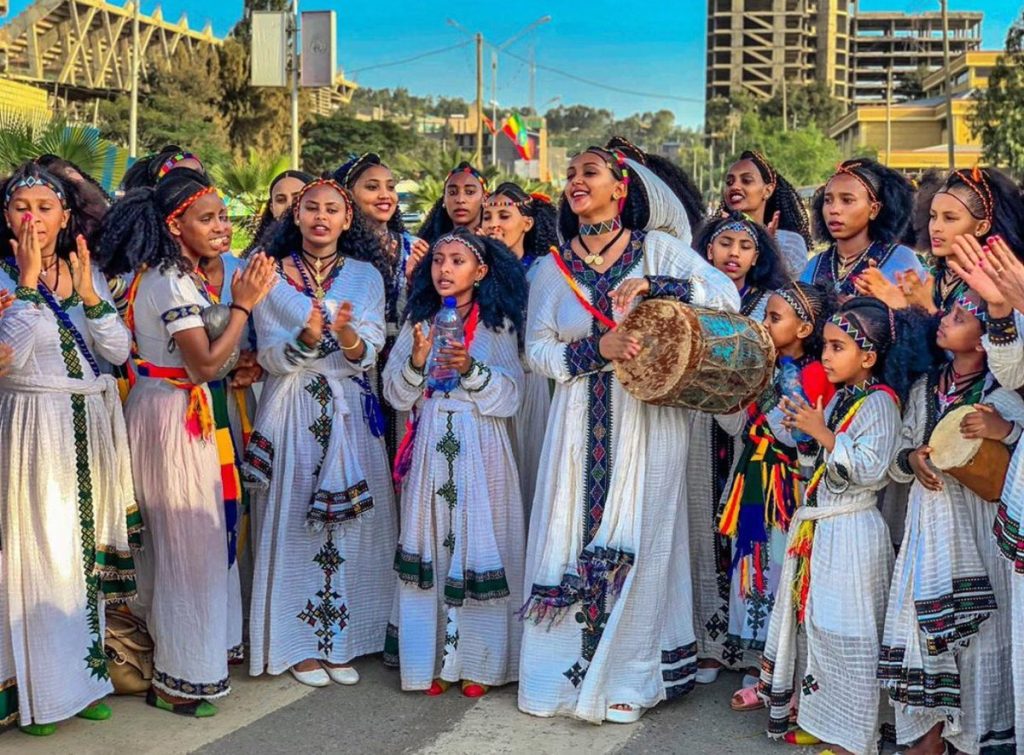
Ashenda is a joyful festival celebrated primarily in the Tigray and Amhara regions, honoring girls and young women as part of post-harvest festivities. Participants dress in colorful traditional attire, adorned with intricate jewelry and beads, and fill the streets with singing, dancing, and playful celebrations. The festival is both a cultural showcase and a social event, highlighting community values, youthful energy, and the preservation of age-old traditions. Visitors to Ashenda witness a unique, immersive experience of Ethiopia’s vibrant rural culture and the celebratory spirit of its people.
Fiche Chembelala
Fichee-Chambalaalla is a New Year festival celebrated among the Sidama people. According to the oral tradition, Fichee commemorates a Sidama woman who visited her parents and relatives once a year after her marriage, bringing buurisame, a meal prepared from false banana, milk and butter, which was shared with neighbours. Fichee has since become a unifying symbol of the Sidama people. Each year, astrologers determine the correct date for the festival, which is then announced to the clans. Communal events take place throughout the festival, including traditional songs and dances.
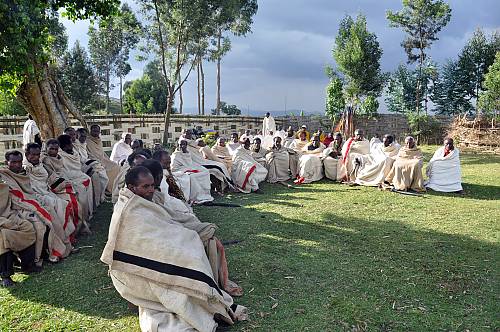
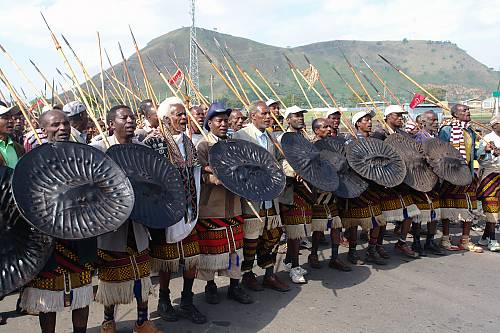
Every member participates irrespective of age, gender and social status. On the first day, children go from house to house to greet their neighbours, who serve them buurisame. During the festival, clan leaders advise the Sidama people to work hard, respect and support the elders, and abstain from cutting down indigenous trees, begging, indolence, false testimony and theft. The festival therefore enhances equity, good governance, social cohesion, peaceful co-existence and integration among Sidama clans and the diverse ethnic groups in Ethiopia. Parents transmit the tradition to their children orally and through participation in events during the celebration. Women in particular, transfer knowledge and skills associated with hairdressing and preparation of buurisame to their daughters and other girls in their respective villages.
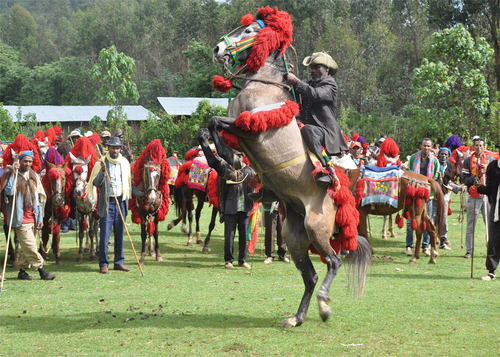
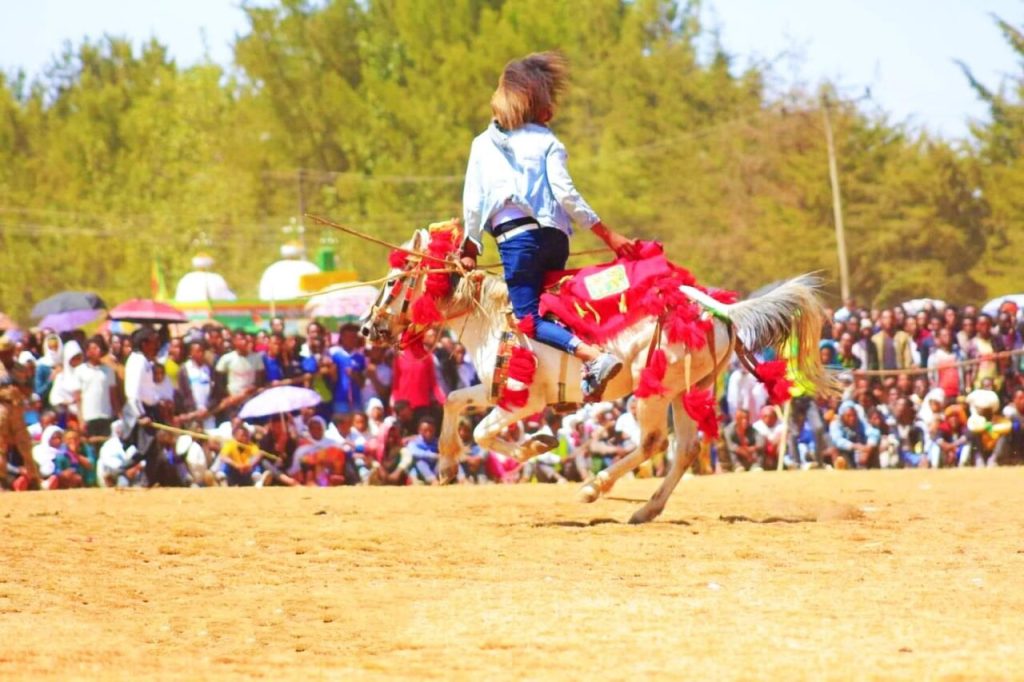
Injibara, the seat of the Agew Awi Zone in the Amhara region. Annually, around January 30th/31st (Tir 23 in the Ethiopian calendar). Attracts tens of thousands of horsemen from surrounding villages, with significant participation from young women demonstrating impressive skills.
Features horse races, dressage (gugs), parades, traditional music, cultural dances, beauty contests, and artisan markets. Deeply rooted in Agew tradition, symbolizing resilience, unity, and the historical importance of horses in Ethiopian culture and warfare. A significant annual event for local businesses, including food vendors, hoteliers, and merchants.
Efforts are underway by regional authorities to secure UNESCO World Heritage status for the festival. It's one of Ethiopia's longest-standing cultural celebrations, offering a vivid glimpse into a unique equestrian tradition, blending historical pride with festive community engagemen
Agew Horse men annual celebration
The Agew Horse Riding Festival is a vibrant annual cultural event in Injibara, Amhara Region, Ethiopia, celebrating Agew heritage with spectacular displays of horsemanship, colorful traditional attire, music, dance, and cultural exhibitions, drawing thousands of horsemen and spectators, and highlighting Ethiopia's rich equestrian history while aiming for UNESCO recognition. Held yearly around late January/early February, it showcases skilled riders, including young women, showcasing intricate riding skills, and is a major cultural and economic event for the region.
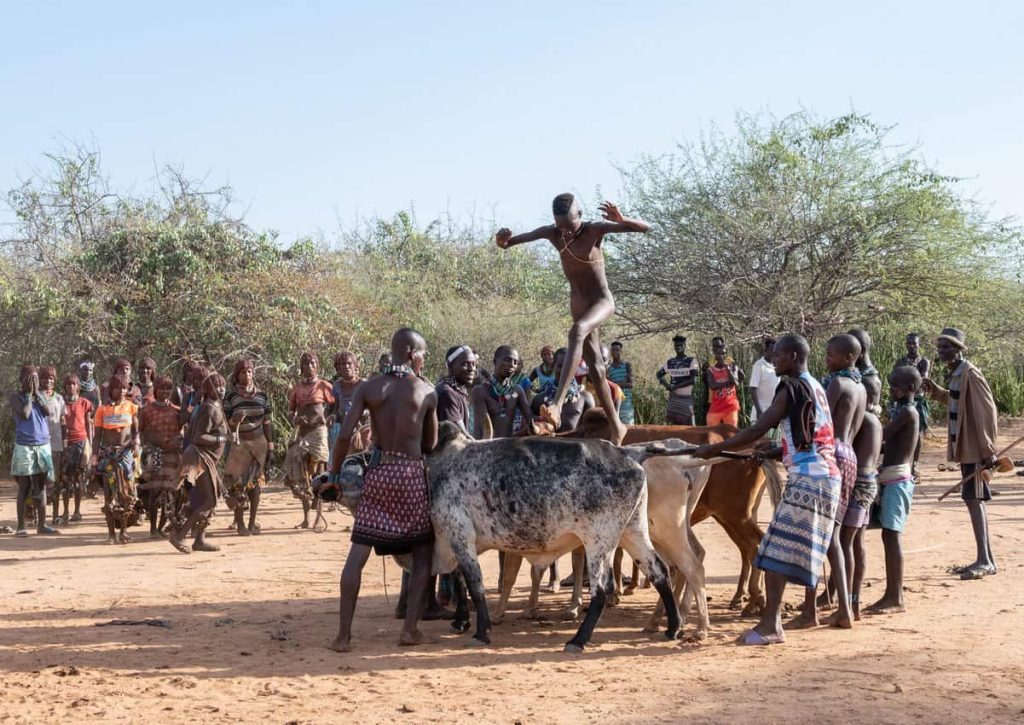
Bull jumping ceremony of Hamar People
An impressive display of courage, skill, and athleticism, the bull jumping ceremony is a centuries-old rite of passage for young men in Hamer tradition. The Hamer are a tribal community living in the Lower Omo Valley of Ethiopia.
On the day of the ceremony, there is plenty of celebrating. Women dance in traditional dress - playing horns with their legs draped in bells - drinking home-brewed sorghum beer. Depending on the social status of the family, somewhere between 100 and 300 people are likely to attend.
Before the ceremony, the female relatives (with the exception of little girls) of the young man go to meet the Maza, men who have just passed the bull-jumping ceremony and who temporarily live apart from the rest of the tribe.
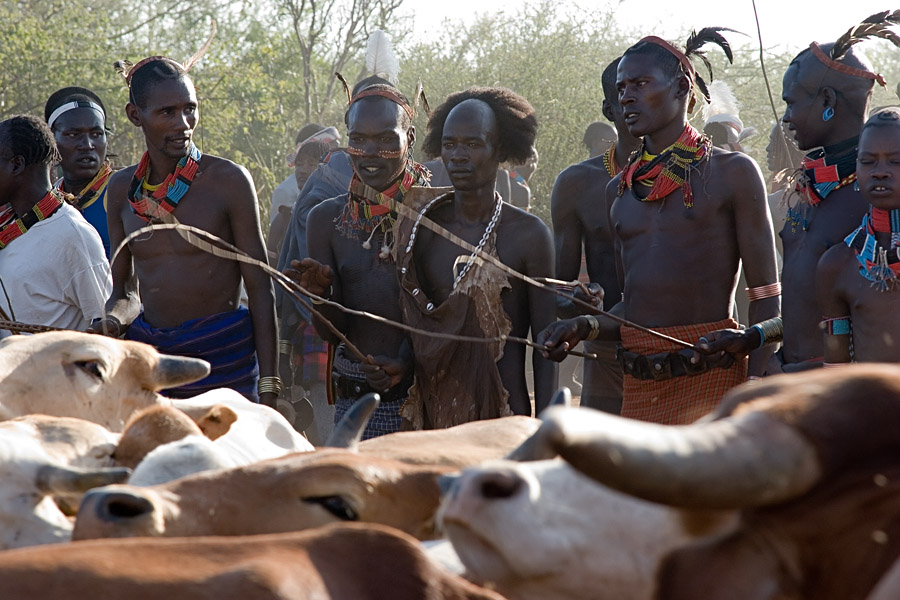
They demand to be whipped by these men as a way of showing their dedication and loyalty towards their male relatives. The idea here is to create a strong bond - an obligation - between them.
As they have undergone such pain so stoically on his behalf, he should feel a debt to protect them going into the future. This also signals their attractiveness as a future wife, and it becomes a kind of competition, with women refusing to back down and vowing to each endure the most pain.
Before the ceremony, the young man is rubbed with sand as a purification ritual, is smeared with dung to deliver him strength, and has his head partly shaved and his face painted. He also has strips of tree bark wrapped around his body, as a religious appeal for protection.
Seven to ten castrated bulls are lined up in a row by the men of the tribe and smeared with dung in order to make them slippery. In the midst of an electric atmosphere and a cacophony of bells and horns, the man must leap up onto, and run over, the several-deep row of cattle 4 times without falling.
If he falls, he fails the ceremony and must try again in a year’s time. If the man is blind or disabled in some way, he will be assisted in doing this by other tribe members.
Once a man passes the test, he is blessed and has an animal skin draped over him, to the sounds of rapturous cheering and celebrating by the surrounding crowd. He will then go to join the Maza, who will shave his head completely. Later, there is a big dance celebration which goes on until the early hours: and celebrations continue for several days following the ceremony.
At the dance, the man will have the opportunity to meet a potential wife, although the first marriage (a Hamer man may have up to four wives) is decided by the parents. Once a marriage is arranged, the man’s family must pay a dowry to the woman’s family of 30 goats and 20 cattle. The man will also be allowed to own cattle once he has passed the ceremony, a crucial part of the life in this pastoralist community.
Donga, Stick fight ceremony of the Mursi and Surma Tribe Tribes
One of the main Surma / Suri tribe of Ethiopia customs is stick fighting. This ritual and sport is called Donga or Sagenai (Saginay). Donga is both the name of the sport and the stick, whereas Sagenai is the name of the stick-fighting session. Stick fighting is central in Suri culture. In most cases, stick fighting is a way for warriors to find girlfriends; it can also be a way to settle conflicts. On this occasion men show their courage, their virility and their resistance to pain, to the young women. The fights are held between Suri villages, and begin with 20 to 30 people on each side, and can end up with hundreds of warriors involved. Suri are famous for stick fighting, but they are not the only ones to respect such a custom, as the neighbor tribe, the Mursi, also practice these traditional fights
The day before the sagenai, fighters have to purge themselves. They do it by drinking a special preparation, called dokai, which is made of the bark of a special tree, which is mixed with water. After taking it, warriors make themselves vomiting the drink. The water is supposed to bring with it many of the body’s impurities. After this ritual they don’t eat until the following morning. Warriors walk kilometers to come fighting at Sagenai, which takes place in a clearing. They stop when crossing a river in order to wash themselves, before decorating their bodies for the fight. They decorate themselves by sliding the fingers full of clay on the warrior’s bodies. This dressing up and decoration is meant to show their beauty and virility and thus catch the women’s attention. The phallic shape ending the sticks contributes to that virile demonstration.
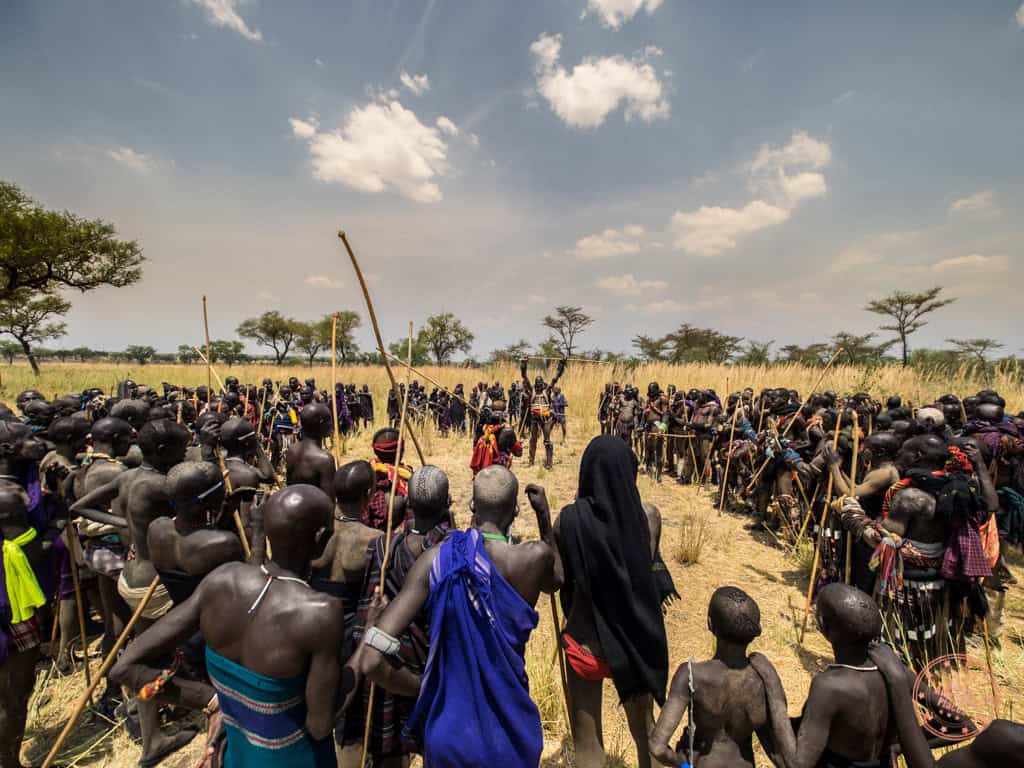
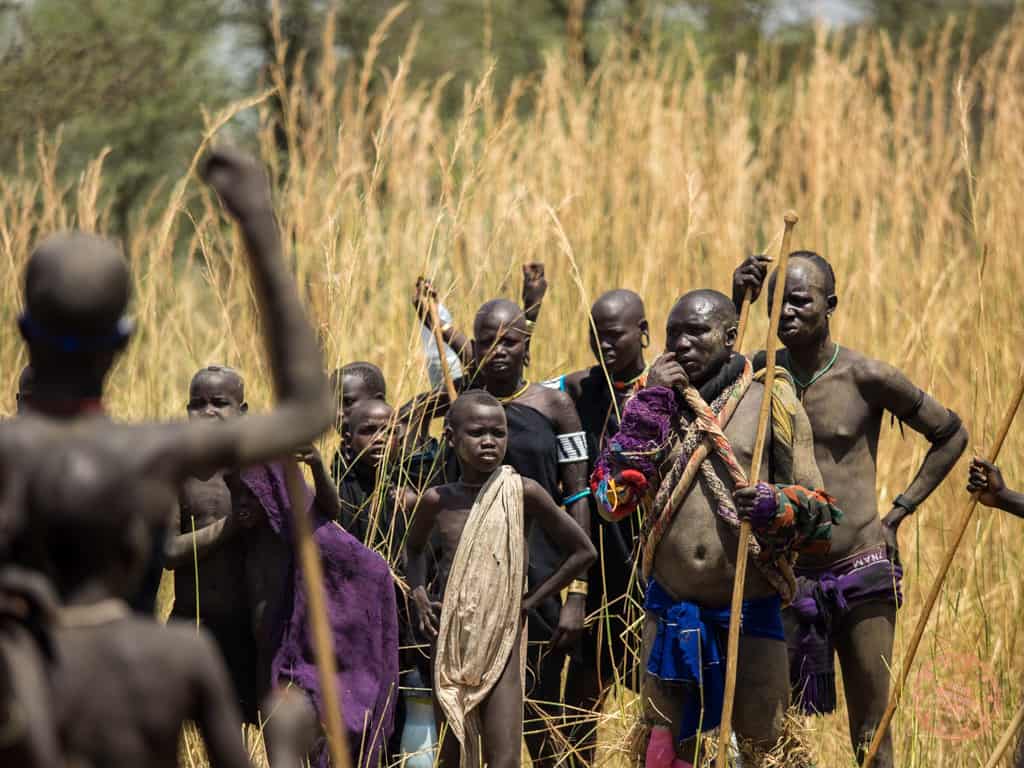
Fighters arrive on the Donga field all together, carrying the strongest man,dancing and singing. Some fighters wear colourful headdresses sometimes with feathers on it, and also knee-protectors. But most of them use no protection at all and fight completely naked in order to show their bravery. They also wear strings of decorative coloured beads around their necks given by the girls and waist, but their genitals are most of the time uncovered and they are barefoot.
All of them get a chance to fight one on one, against someone from the other side. In the beginning each fighter looks for an opponent of the same stature, and exchanges a few held back blows with him in order to test him. If both fighters feel they have found a match, they suddendly throw themselves into the fight, hitting ferocious fast strokes with their sticks. If one of the warriors knocked out or puts paid to his opponent, he immediately declares himself the winner. Sagenai consists in qualifying rounds, each winner fighting the winner of a previous fight, until two finalists are left.
It is strictly forbidden to hit a man when he is down on the ground. During these fights there are referees present to make sure all rules are being followed. Many stick fights end within the first couple of hits. Nevertheless the fights are really violent, and it is quite usual to see men bleeding. Stick fighting has proven to be dangerous because people have died from being hit in the stomach. Loosing an eye or a leg during the fight is quite common, although it is strictly forbidden for a fighter to kill his opponent, and if a fighter gets killed during the fight, his opponent and all his family are banned from the village for life. For the other locals, especially teenagers, sagenai is a great outing. Girls watch the fights, but it is also the occasion to check out the men, and to meet in order to chat or even gossip
At the end of the fights, the winners point their phallic sticks in direction of the girls they want to date with, if the girl put a necklace around the stick, it means she is willing to date the champion. Sometimes a group of girls is presented to the champion, who previously which one of them would date the him.
Since stick fighting draws a large audience, it becomes dangerous. For the audience the risk of being hit, is not to be underestimated. Shooting can also easily break out and this seems to be the new trend for young Suri men using AK-47 (Kalashnikov) instead of sticks. The risk of being shot is all the higher as spectators and participants drink gesso, a thick local beer made from fermented maize, and are often quite drunk during the Sagenai.
It’s quite common to see men carrying weapons which are part of the daily life. Their remote homeland has always been a place of traditional rivalries with the neighbouring tribes such as the Bume (Nyangatom) or the Toposa. who regurlarly team up to raid the Suri’s cattle. These fights, and even sometimes battles, have become quite bloody since automatic firearms have become available from the parties in the Sudanese Civil War. This conflict has pushed neighboring tribes into Suri’s land and is a constant competition to keep and protect their territory and their cattle. A battle even ended up with the death of hundreds of Suri, including women and children.
Kael, fatness competition among Bodi people
Imagine your reaction when you find yourself a tribe where big is definitely beautiful. Welcome to the Ethiopian Bodi tribe where men compete to be the fattest in the village by drinking concoction which they claim is a mixture of blood and milk while living in isolation for six months.
Variety is indeed the spice of life!
Slim might be the big deal elsewhere but for Ethiopia’s Bodi or Me’en tribe, the bigger the better is the case. The Bodi people, live in a remote corner of Ethiopia’s Omo Valley and is home to young men who do all it takes to be crowned the fattest man.
Here’s how it works. Young men are selected and fed special meals and concoction for six months and after that, emerge to show off their newly engorged physiques and for a winner to be chosen. The champion “fat man” is then feted as a hero for the rest of his life.
The food comes in the form of a cow’s blood and milk mixture, served regularly to the men by women from the village. The cows are sacred to the Bodi tribe so they are not killed for the purpose of the ritual. The blood is drawn by making a hole in a vein with a spear or an axe, and after that, they close it with clay.
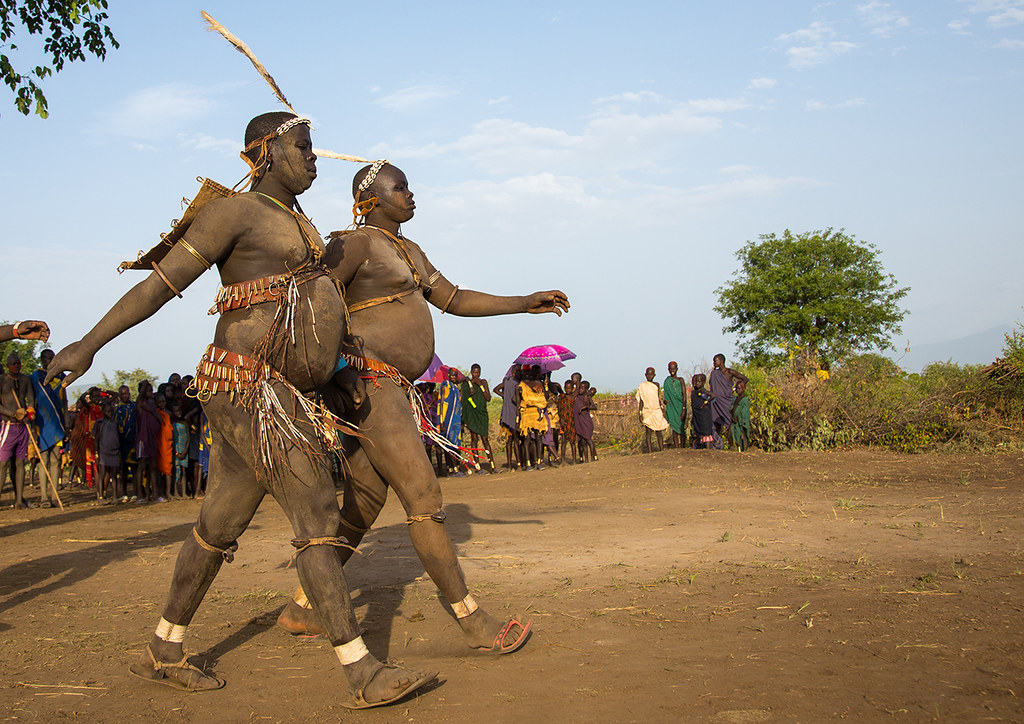
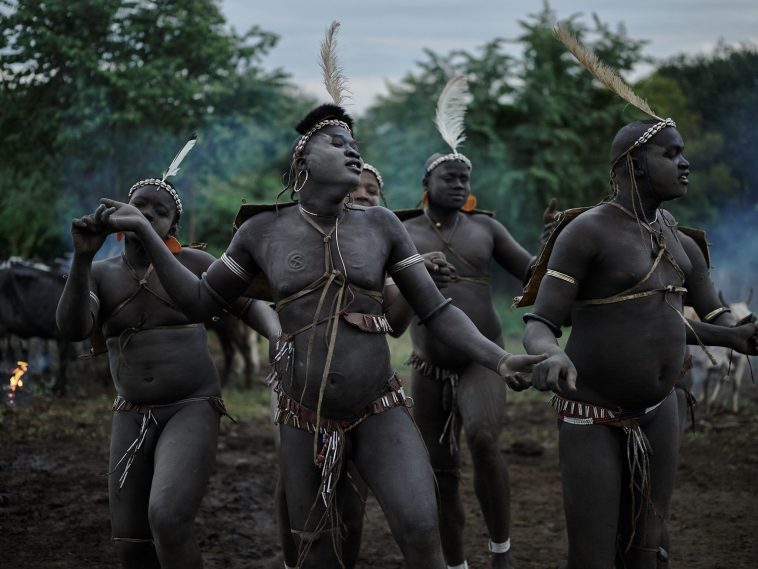
Because of the scorching temperatures, the men have to drink the two-litre bowl of blood and milk quickly before it coagulates but not everyone can handle drinking so much at speed, so they vomit. These are the ones that are disqualified.
On the d-day, the men design their bodies with clay and ashes before emerging from their huts for the walk to the spot where the ceremony will take place. This long walk seem tortuous, no thanks to the excess weight gain and protruding stomach. The ceremony involves spending long hours walking in a circle around a sacred tree, watched by the other men and helped by women who ply them with alcohol and wipe away the sweat.
Once the fattest man has been chosen, the ceremony ends with the slaughter of a cow using a big sacred stone. Village elders will then inspect the stomach and the blood to find out if the winner’s future will be a bright one or not.
After the ceremony, the men’s lives return to normal and most lose their enormous bellies after a few weeks of eating sparingly and a few weeks later, the next generation of competitively fat Bodi men will be chosen and the cycle repeats.
Becoming a fat man is the dream of every Bodi kid because he will remain a hero for life even though his stomach gets back to normal.
Sadly, Bodi’s traditional way of life is under threat from the Ethiopian government who plans to resettle 300,000 people from all over the country on their lands. For now, the tribe continues as they always have, and still celebrate the Ka’el in a traditional style each June.
Religious festivals
Ethiopia's religious festivals, predominantly from the Ethiopian Orthodox Tewahedo Church, are vibrant cultural events like Timkat (Epiphany) for Jesus' baptism, Meskel (Finding of the True Cross) with large bonfires, Genna (Christmas) on Jan 7th with all-night vigils, and Fasika (Easter) after a long fast, featuring colorful masses and feasting; Islamic holidays like Eid al-Fitr and Eid al-Adha are also celebrated, alongside unique cultural festivals like Oromo's Irrecha for thanksgiving, all showcasing deep faith and community spirit.
Timkat (Epiphany)
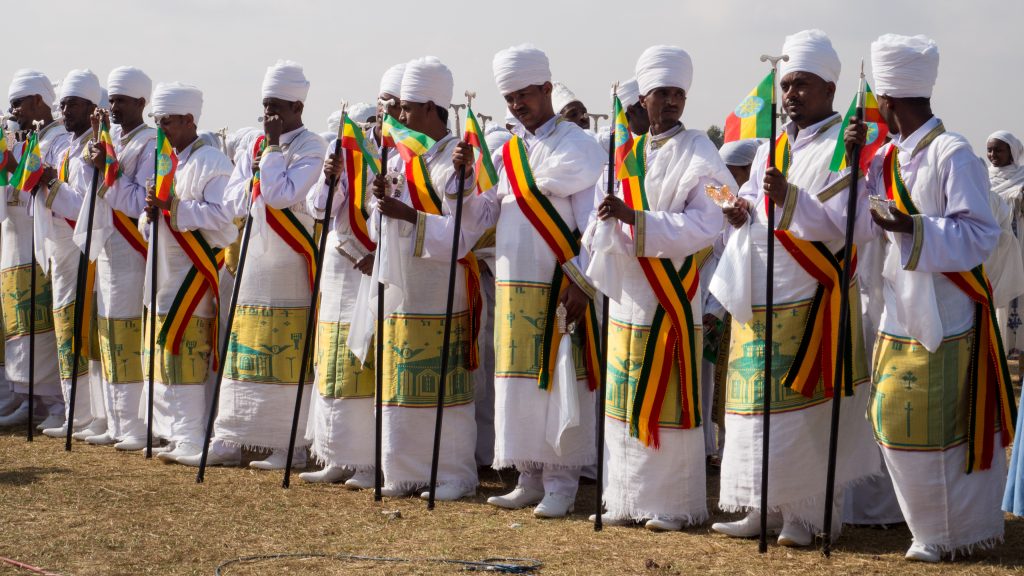
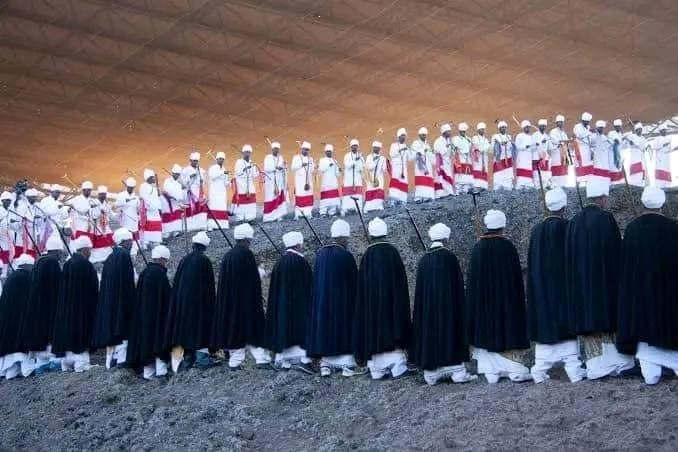
Timkat, Ethiopia’s vibrant celebration of the baptism of Jesus in the River Jordan, is one of the country’s most iconic religious festivals. The streets come alive with colorful processions, priests carrying ornate tabots (replicas of the Ark of the Covenant), and worshippers dressed in traditional white robes. The festival is marked by the sprinkling of holy water, joyful singing, and rhythmic drumming, creating an atmosphere of spiritual devotion and communal celebration. Timkat is not only a profound religious event but also a spectacular cultural experience, drawing locals and visitors alike to witness Ethiopia’s living traditions.
Genna (Ethiopian Orthodox Christmas) January 7
Genna, Ethiopia’s Orthodox Christmas, is a deeply spiritual festival celebrated with church services, family gatherings, and traditional feasts. Early morning mass features chants, candlelit processions, and prayers that echo through historic churches across the country. Outside the churches, communities come together to share injera and stews like doro wat, reinforcing bonds of family and faith. The festival reflects Ethiopia’s rich Christian heritage, offering visitors an authentic glimpse into centuries-old customs and the joyous, communal spirit of the holiday.
Meskel (Finding of the True Cross) september 27
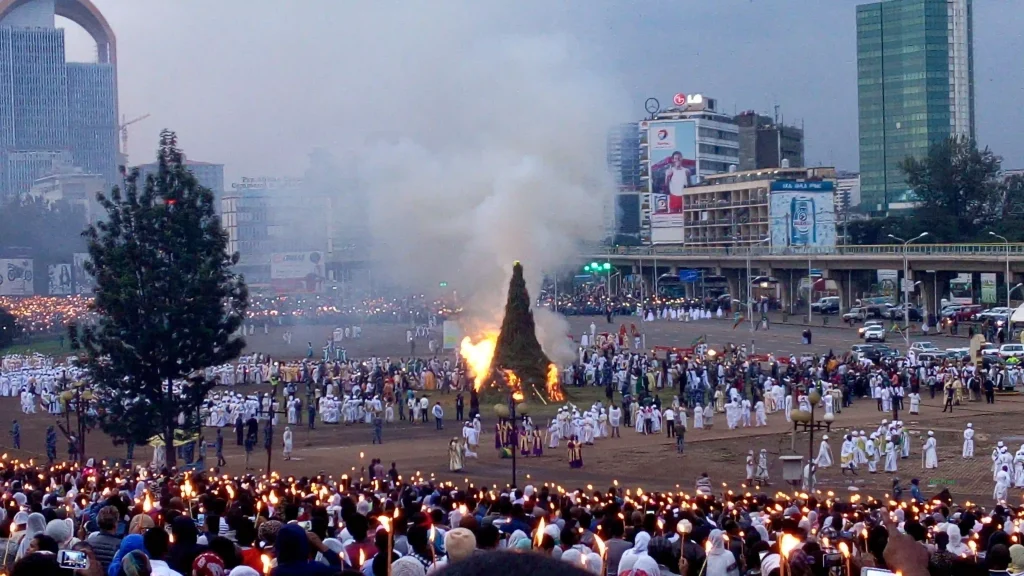
Meskel commemorates the discovery of the True Cross by Queen Helena and is one of Ethiopia’s most visually spectacular festivals. The highlight is the Demera, a massive bonfire around which thousands gather to sing, dance, and celebrate. Participants wear traditional attire, wave colorful flags, and offer prayers, creating a lively and spiritual spectacle.
Axum zion Festival November 30th
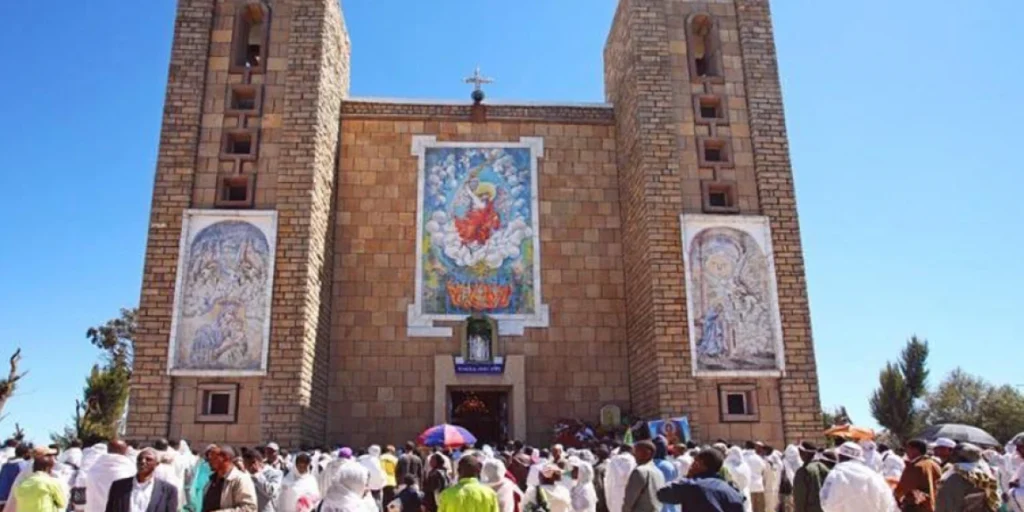
Known locally as Hidar Tsion, is an annual religious festival in Ethiopia that commemorates the arrival of the Ark of the Covenant in Axum and honors Saint Mary of Zion. The event takes place every year on November 30th (Hidar 21st in the Ethiopian calendar) and is one of the most significant pilgrimages for the Ethiopian Orthodox Tewahedo Church.
Annually on November 30th (or December 1st in a leap year). The celebrations begin on the eve of the main festival.
The historic city of Axum in the Tigray Region of Northern Ethiopia, specifically at the Church of Our Lady Mary of Zion.
The festival is rooted in the belief that the original Ark of the Covenant, containing the stone tablets of the Ten Commandments, is housed in a chapel adjacent to the church. According to tradition, the Ark was brought to Ethiopia by Menelik I, the son of the Queen of Sheba and King Solomon.
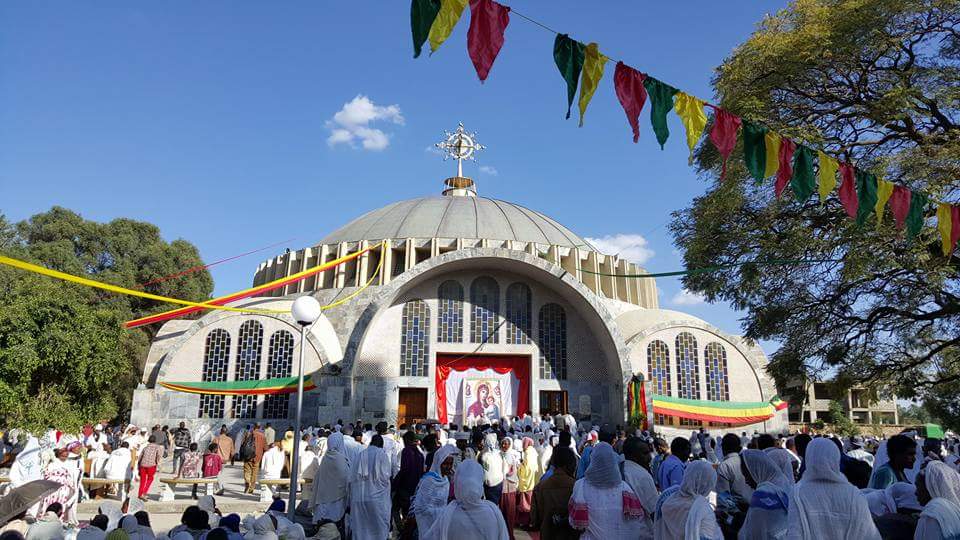
The day also marks the construction of the first church dedicated to St. Mary in Axum. Tens of thousands of pilgrims from across Ethiopia, and international visitors, gather in Axum, which is considered the holiest city for Ethiopian Orthodox Christians.
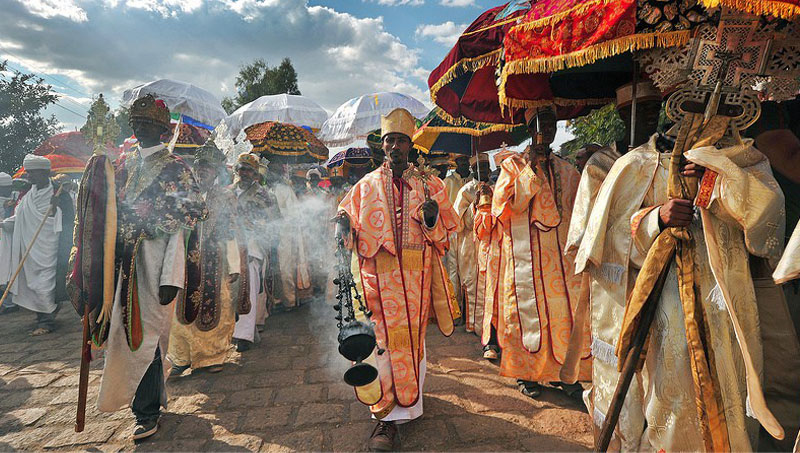
The celebration involves vibrant processions of clergy and deacons, chanting, drumming, traditional dancing, and night-long prayers. The city comes alive with spiritual hymns, lively markets, and the aroma of traditional foods. Pilgrims often wear traditional white robes (shamma).
The event is deeply spiritual, with many believing the pilgrimage brings blessings and forgiveness. The community practices welcoming strangers into their homes and offers traditional dishes.
The festival is an important expression of Ethiopia's ancient Christian heritage and culture, showcasing the deep-rooted faith and resilience of its people
Abreha Atsbeha Festival October 14
The Abreha Atsbeha celebration is an annual religious festival observed on October 14 (4 Tiqmti in the Ethiopian calendar) at the Abreha we Atsbeha rock-hewn church in the Tigray Region of Ethiopia. Thousands of Orthodox pilgrims gather at the site for this special holy day.
The celebration honors the two Aksumite kings, Abreha and Atsbeha (also known as King Ezana and his brother Saizana), who are traditionally credited with converting the ancient Kingdom of Axum to Christianity in the 4th century CE. The church itself, a significant center of Ethiopian Orthodox Christianity, is named after them, and tradition holds that the kings' remains are interred within the church's Holy of Holies.
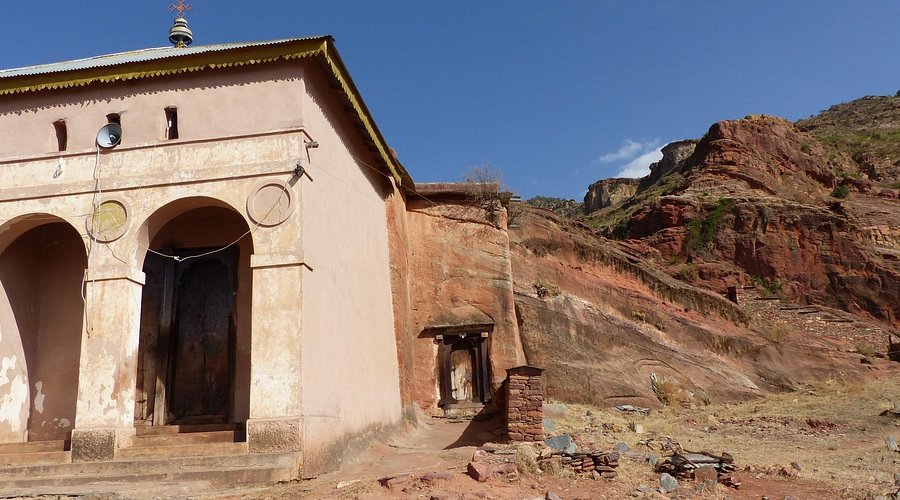
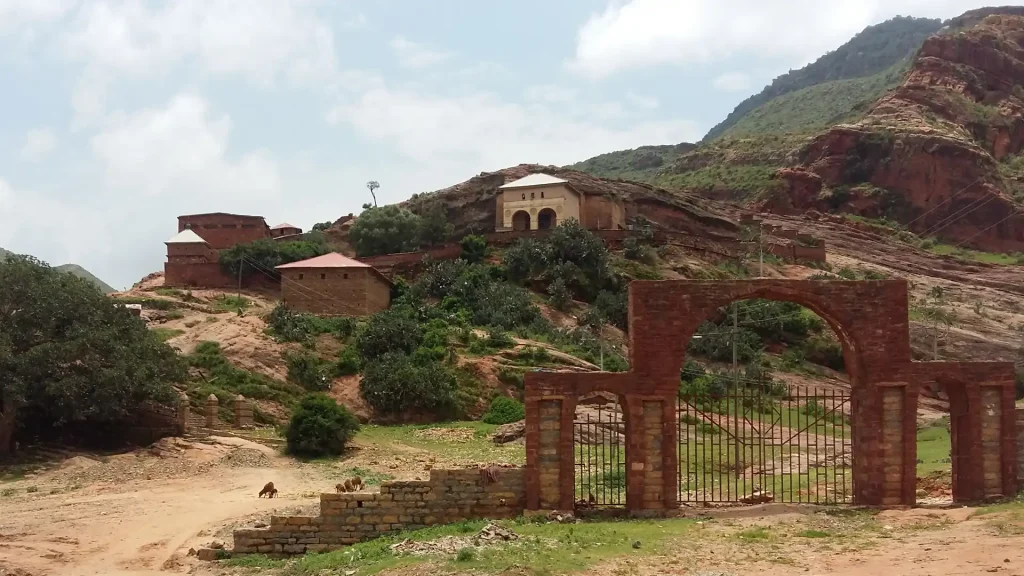
Key aspects of the celebration include:
Devout Orthodox believers make a pilgrimage to the church, located near the town of Wukro, to attend the special services.
The day involves night-long prayers, hymn services, and midnight mass, with priests chanting, using drums and sistras (rattle-like instruments) as musical accompaniment.
The festival is a unique cultural event, offering a chance to witness the deep spiritual devotion and ancient traditions of the Ethiopian Orthodox Tewahedo Church.
If you plan to visit the Abreha we Atsbeha Church, especially during the celebration, keep the following tips in mind:
The area will be crowded with thousands of pilgrims. As it is an active place of worship, modest dress is required; women should cover their shoulders and knees.
The church is relatively easy to access compared to some other Tigray rock churches, with a manageable number of steps
Ethiopian Palm Sunday ( Hossana)
Palm Sunday, known as Hosanna (or Hossana) in Axum, Ethiopia, is a vibrant, colorful festival for Ethiopian Orthodox Christians, marking Jesus' entry into Jerusalem with processions, chanted masses, and worshippers wearing palm leaves on their foreheads as a symbol of reverence and victory. Celebrated at the sacred St. Mary of Zion Church, it involves carrying palm branches, parading the Ark of the Covenant replica, and wearing special palm leaf headbands, drawing pilgrims from across Ethiopia and the world for this significant start to Holy Week.
Deacons and followers parade palm leaves and a replica of the Ark of the Covenant (from St. Mary of Zion) around the church, often three times.
Worshippers create and wear rings and headbands from palm leaves throughout the day.
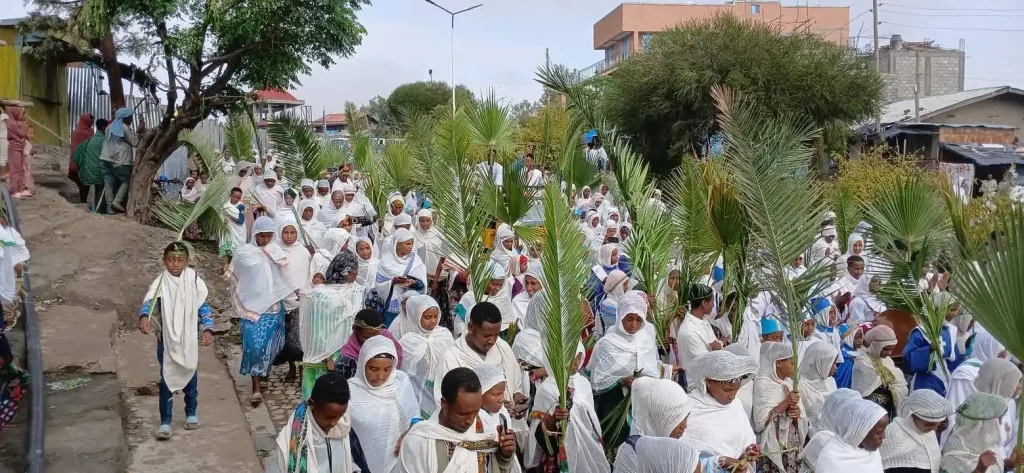
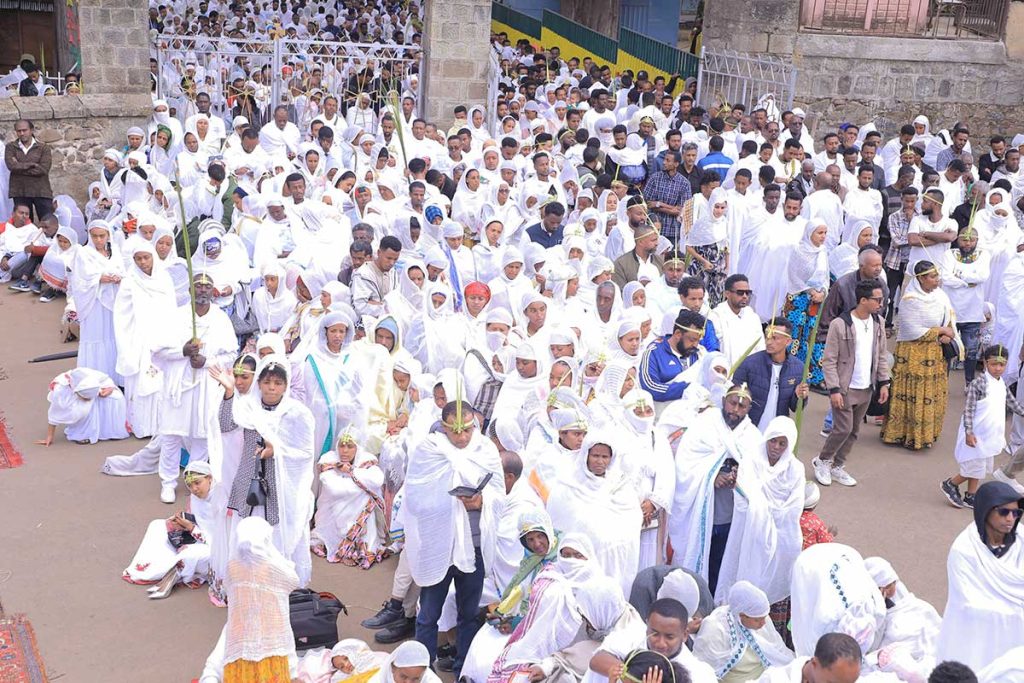
Many devout Christians camp in the church compound for continuous services leading up to the main event.
The palm leaves represent the branches laid before Jesus, symbolizing victory and honor. It's one of Ethiopia's most significant celebrations, attracting huge crowds and international visitors.
The celebration falls on the Sunday before Easter, usually in late March or April, coinciding with European Easter.
Axum is the primary location, especially around the historic St. Mary of Zion Church.
Addis Ababa Entoto St. Mary Church also offers a great way to witness the festival.
Ethiopian Easter celebration No constant day
Ethiopian Easter, or Fasika, in Axum is a profound spiritual event following 55 days of strict fasting, culminating in vibrant midnight church services at ancient sites like St. Mary of Zion, where believers in white robes light candles, chant, and celebrate the resurrection with immense joy, marking a grand family reunion with feasts of chicken or lamb (Doro Wot) and traditional dishes, showcasing deep faith and rich culture.
The Fast (Hudade/Abye Tsome) a 55-day period where Orthodox Tewahedo Christians abstain from meat, dairy, and eggs, eating only vegetarian meals.
Palm Sunday (Hoseana) Celebrated with colorful processions and collecting palm leaves, centered around the Church of St. Mary of Zion.
A solemn day with intense prayers, where worshippers kneel and rise 101 times during services.
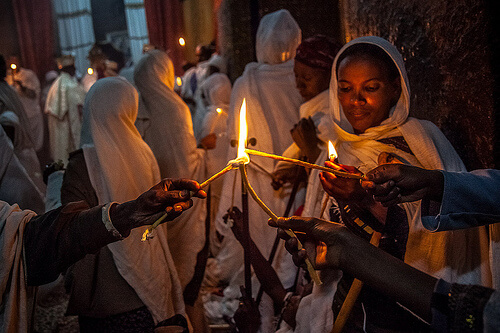
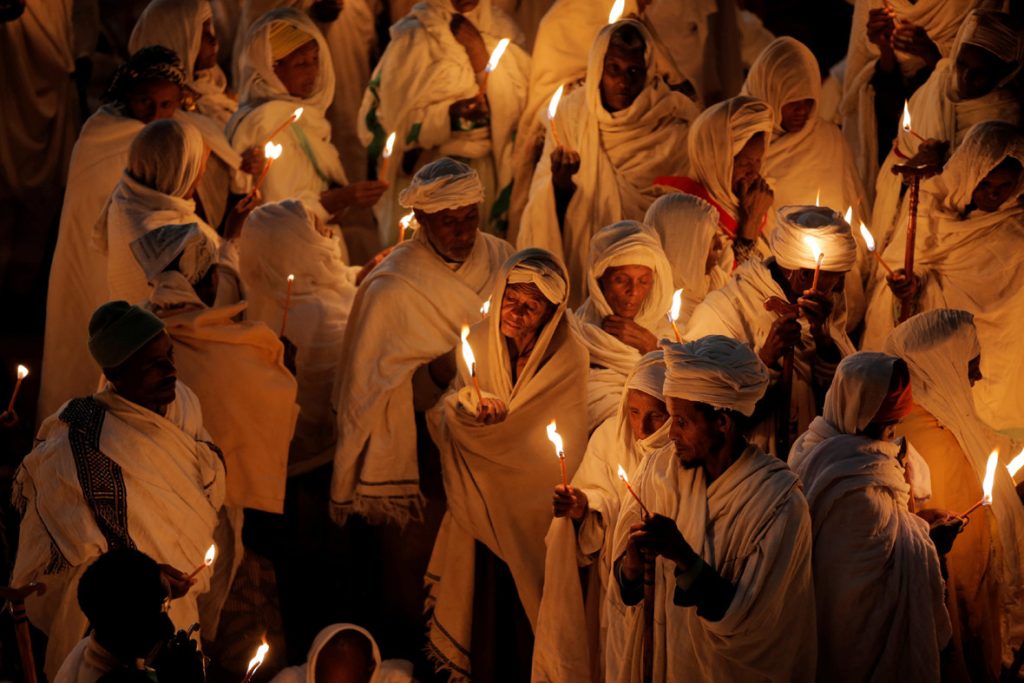
At dawn, families break the fast with symbolic feasts, often including Doro Wot (spicy chicken), lamb, and injera.
Axum, as the ancient capital and cradle of Ethiopian Christianity, becomes a major pilgrimage site, offering an authentic glimpse into Ethiopia's religious heritage and strong community bonds.
Be present at the Church of St. Mary of Zion for the Palm Sunday procession and the midnight Easter service.
Experience the candle lighting, chanting, and the symbolic kneeling during Good Friday.
Participate in the joyous breaking of the fast with traditional foods and drinks.
Witness the unity, gift-giving, and expressions of goodwill that define this major family holiday The main event; large crowds gather in traditional white attire for a lengthy, candlelit mass (6 PM to 2 AM) at holy sites, awaiting the announcement of Christ's resurrection.
Abune Aregawi( Dabre Damo) Festival Tikimt 14
Abune Aregawi is one of the Nine Saints that traveled in exile from Rome to Axum - North part of Ethiopia to escape persecution after the Council of Chalcedon (451). Abuna Aregawi and the other Eight Saints are credited in Ethiopia with enculturating and spreading the Orthodox Faith.
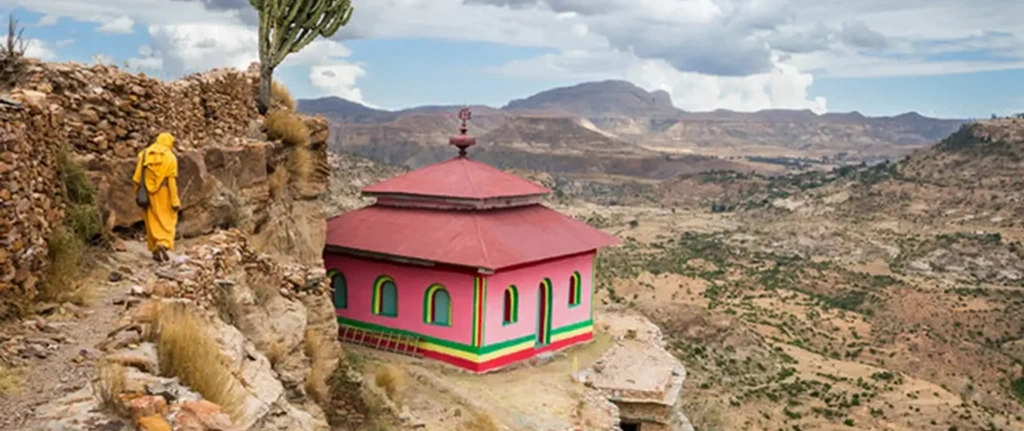
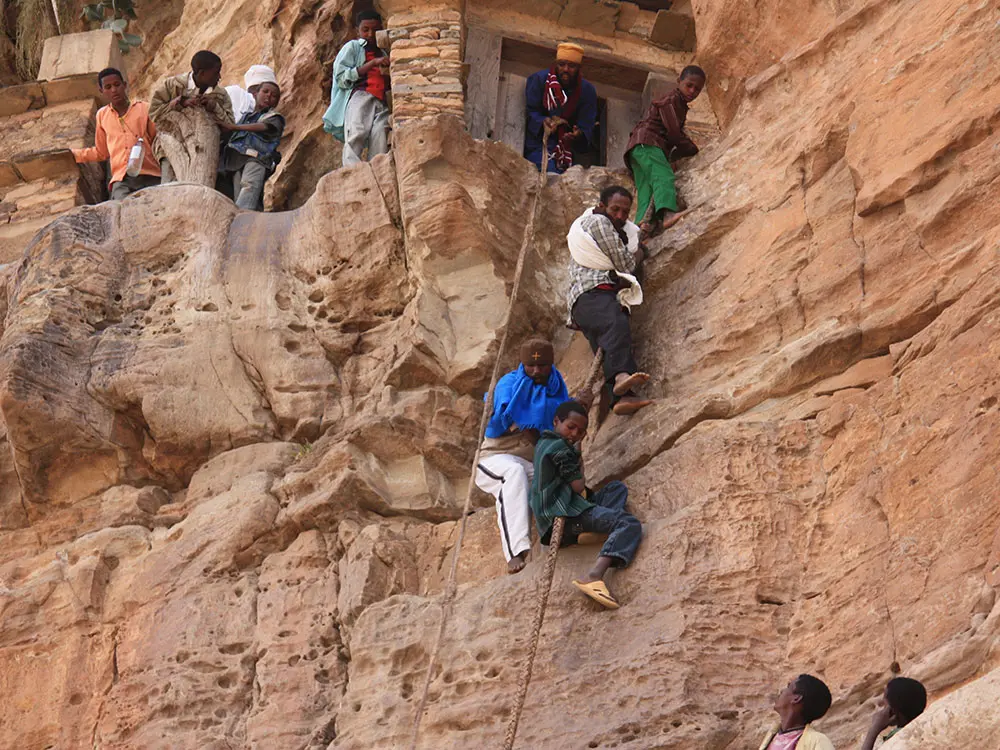
The feast of Saint (Abune) Aregawi is celebrated on Tikimit 14 / October 24 Ethiopian calendar which culminates that Abune Aregawi taken to heaven and celebrated in a pilgrimage to Debre Damo from all over the country. Debre Damo is only accessible by climbing up by a rope which symbolize the saint was assisted by a giant serpent to the top. The rope is made of "plaited leather", lowered from the cliffs, which visitors tie around their waist and are then pulled up by a monk at the top of the cliffs. It is only accessible to men and male animals. Women and even female animals are forbidden to set a foot into the monastery, and must remain under the cliffs. Female believers may pray and take the blessing of Debre Damo at Kidane Mihiret, located at the entrance to the wall.
Gishen Maryam(Gishen Dabre Kerbe ) October 1st (2nd in a leap year)
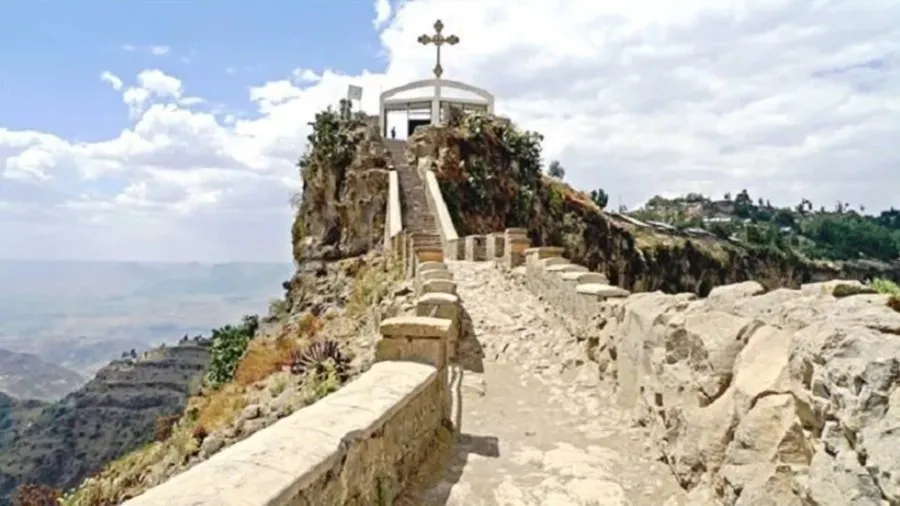
Gishen Maryam is a remote monastery with four churches 490 km from Addis Ababa, in the mountains between Dessie and Woldya. The last part of the journey takes about half an hour on foot. It is one of the oldest monasteries in the country with a rich history. It is believed a piece (the right arm) of the True Cross obtained by Emperor Dawit in the 15th century, is deposited in the monastery.
The whole country celebrates Meskel, the finding of the True Cross at the end of September. Thereafter, at Gishen Maryam the deposition of the True Cross is celebrated very colorfully on October 1st (2nd in a leap year), Gregorian calendar. Many thousands of pilgrims attend this festival.
Kulibi Gabriel July 26th and December 28th (29th in a leap year)
Like Mikael there are also two annual days dedicated to archangel Gabriel. The monthly day is on every 19th day of the month Ethiopian calendar and Hamle 19 and Tahisas 19 are the annual celebrations. This is July 26th and December 28th (29th in a leap year) Gregorian calendar.
The celebration on both days is particularly colorful in Kulibi Gabriel, Hamle 19 is a bit smaller because of the rainy season. Kulibi is found 465 km east of Addis Ababa, 60 km before Harar. Many thousands of pilgrims will participate here.