
After breakfast start drive to Awassa. We drive south down the Rift valley passing lakes Koka, langano, Abiyata and Shalla Lakes. E-n route we stop on the lakes for bird watching. Specially Lake Ziway is very rich of birds. Urther through Shashemene to Awassa and check in Lake Shore hotel located on the best side of lake Awassa. In the afternoon we can have walk around the Lake for bird watching
After visiting the traditional fish market called amora Gedel, We drive south down the Rift valley turning west at the town called Shashamane. Then we drive through the rolling hills of Wolayta. En- route you visit the different house styles of the Alaba Oromos, the Wolaita's, and Hadiya. Short stop to visit the potter's village. Reach Arba Minch town located between two lakes, Abaya and Chamo
Morning drive to Chencha to visit the colorful Tuesday market of the Dorze people on the top of Guge mountain(3400 meters a.s.l. ). Also visit the Dorze people culture of weaving and their beehive style house made from bamboo. In the afternoon, boat excursion on lake Chamo to see crocodiles and hippos and many birds. This is one of the best sites in the world where you can see the biggest crocodiles. The lake is also rich in variety of aquatic birds. You meet also the local fisher men doing their usual job on boats made in traditional way.
This days is a day to start to drive in the remote south Ethiopia and to see different people culture in wilderness. Around Konso, you see the people of Derashi, Gidole and Gewada mostly with traditional short skirt. Admire their house style and village complex, and their farming style. Konso people are known for their intricately terraced hill. Konso is a site recorded by UNESCO as World Heritage.
Around Woyto river the people of Tsemay and Benna with their animal skin made clothes and their body is decorated with bids, quarry shells and metals and unique hear styles. After short stop at Woyto village continue to Erbor Tribe village to see one of the colorfull tribe in Omo valley.
We continue the drive to Turmi, the center of Hammar people. The Hamer are a fine looking people, both men and women take great pride in their appearance, shaving and coloring their hair, oiling their bodies and decorating themselves with beads and bracelets worn around arms and legs. They are also famous for their annual celebration of initiation of boys to transform to adult hood, a ceremony called Bull-Jumping. Bull-jumping is a precondition of marriage for men of Hamar people. June up to September, which is after harvest time in the area, is a time for bull-jumping. They rarely do the jumping in other months.
After a relaxed breakfast and walking in the surrounding of the area we visit the weekly market of the Hamar people. Saturday is a very colorful and one the vibrant market of the area. Here the Hamar and the Benna people meat for exchange of their products. The tribal people walk to this market from all over the area to buy and sale. Tjis gives you a big hint about the daily life of the people, their products and the traditional materials on daily use.
We live Jinka after breakfast and to the western direction of Mago park to see the Mursi people. They mostly live in separate villages of small groups. The famous Mursi women sport remarkable lip decorations, flat slabs of dried clay which can be the size of a small plate, inserted into the lower lip. The men are renowned warriors; very slender, they rarely cover up their body which proudly bears the scars of their combats. Drive back to Jinka
After early start direct to the Eastern direction of Konso. Cross the territory of Ari and Benna people. Your first stop is to visit the Benna people village. Around Woyto river the people of Tsemay and Benna with their animal skin made clothes and their body is decorated with shells, bids, quarry shells and metals and unique hear styles. After the visit continue to Arba Minch via Konso.
On this drive we are taking another route which can show us the different landscape of the Wolaita, Kembata and Hadiya. After a short stop for lunch in Hossana town we continue the drive and will stop to see the Archaeological site of the Tiya staele and continue to Addis
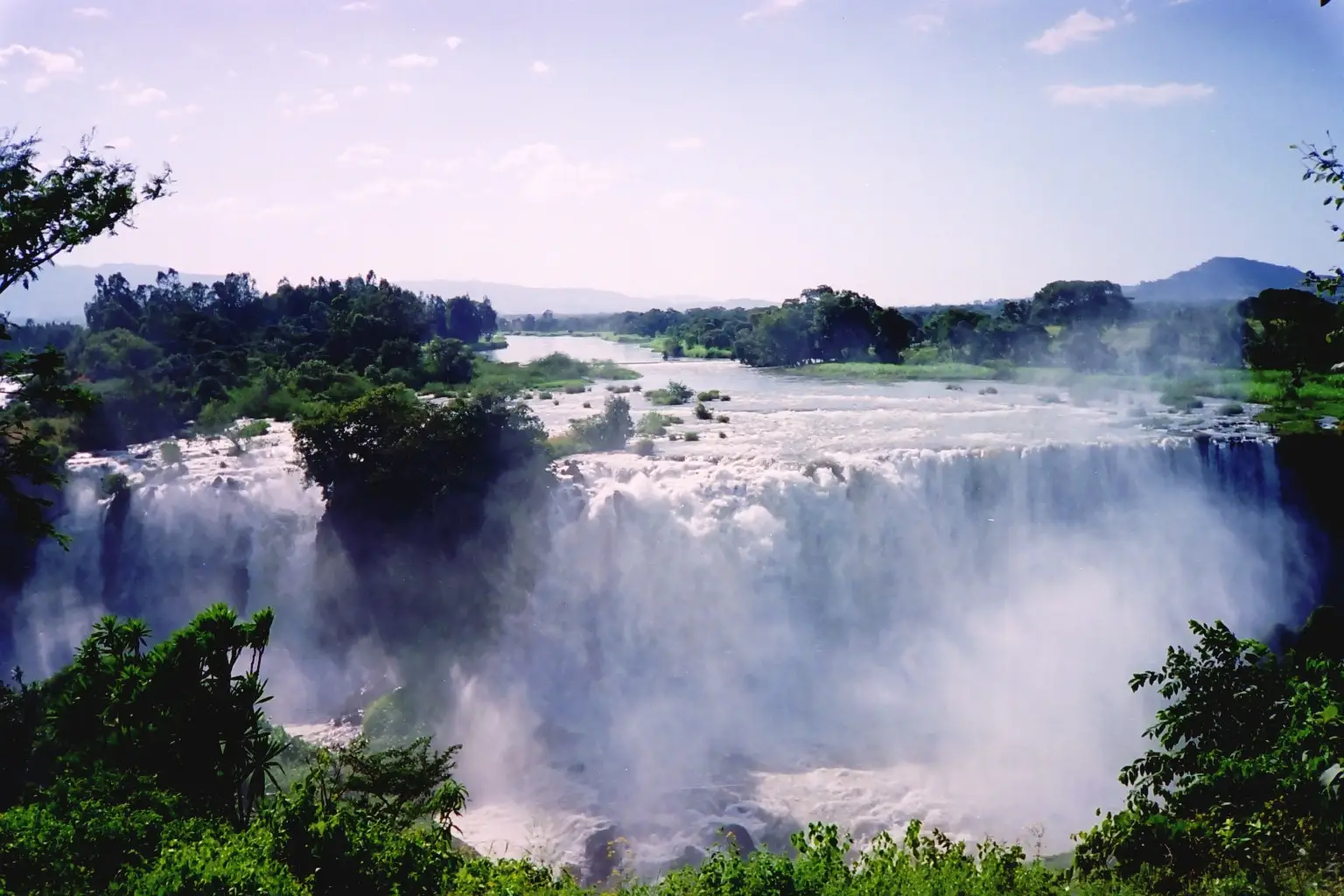
Lake Tana is the source of the Blue Nile, and the most dramatic wonder here is the Blue Nile Falls; in flood-stage it is more than 1300 feet wide. After dropping over a sheer chasm more than 150 feet deep, the mist drenches viewers a half mile away. In a gorge created by the waterfall is a small rain forest lush with tropical vegetation and inhabited by lively monkeys and a multitude of spectacular birds. Now a days more than 90% of the waterfall is used for hydro electric power. January is the best time of the year to see the falls. But to go there and walking in the river gorge and the surrounding scenery is god experience. After visiting the waterfall at 35 km drive back to Bahir Dar and free time.
After breakfast we start the drive to Gondar. The road is crossing many types of highland and lowland agricultural fields. On your way you see farmers and people from the rural villages walking to the nearby towns to/from small town markets. In Northern Ethiopia Saturday is market day and Sunday rest day. We will have several stops for pictures. Arrive Gondar after around 3 hours drive and check in to Quara Hotel.
After lunch we start the visit of the sites. Gondar is where magnificent fortified palaces dominate the landscape. The oldest and most impressive is the two-story palace of Emperor Fasilidas, built of solid basalt stones. Other royal buildings include the library of Emperor Yohannes I, the House of Song where royal ceremonies took place, the elegant reception and banquet hall of Emperor Bakaffa, and the palace of this king's wife. Just outside of town is the Bathing Palace where Epiphany is celebrated each year. Also visit the Church of Debre Birhan Selassie, an imposing structure with its harmony of brightly colored ceilings completely covered with intricately painted angels.
We visit Woleka, Falashas (Ethiopian Jews) village is Just 3km north of Gonder, several craft stalls with ‘Stars of David’ and ‘’ signs signal what’s really the former Falasha village of Wolleka. Once the home to a thriving population of Falashas, most were taken to Israel in the 1980s and today none remain. There are, however, a few original houses with interesting artwork on their fronts.
After the adoption of Christianity as the state religion, Falashas had their land confiscated for refusing to convert. To survive, many became skilled craftspeople. Research suggests Falashas may have provided the labour for the construction and decoration of Gonder’s castles.
Another interesting place to see at the nearby is Project Ploughshare Women’s Crafts Training Center which is helping disadvantaged women rekindle this craft, along with traditional Amhara weaving and basketry. You can watch the women working Monday to Saturday and buy the high-quality pottery every day
Transfer to Addis Ababa Airport for your flight to Axum. This ancient city, with its half buried ruins of palaces, monolithic stele, and subterranean tombs, is one of Ethiopia's most historic sites. Reputedly the capital of the Queen of Sheba, Axum is the now hub of Ethiopian Christianity. Visit the Park of the Obelisks where several colossal monoliths still stand together, marking the tombs of the Axumite royals. Nearby, is the subterranean Tomb of Ramha, a former king of Axum. Beneath the Palace of Kaleb, steep stone steps lead to underground galleries and chambers, locally believed to be the treasury of Emperor Kaleb. Visit a historically important dedicatory stone dating back to approximately about 320 AD with an inscription written in three languages - Sabaean, Ge'ez (earliest written Ethiopian language), and Greek, and explore the tomb of King Basen, who ruled at the time of the birth of Christ. Also explore Gobadura, where Axum's giant stelae were quarried, and see the impressive relief drawing of a lion cut into a large boulder. Axum is where the Ark of the Covenant of Biblical fame is reported to be hidden within the compound of the Church of Saint Mary of Zion. The new, and rather garish church was built with the support of the late Haile Selassie.
Transfer to Axum Airport for your flight to Lalibela. You will be met and transferred to your hotel. Eight hundred years ago King Lalibela created a marvelous gift to the world. Often called the Eighth Wonder of the World, Lalibela contains towering churches that were carved from the soft, volcanic tuff in which they stand. Some lie almost completely hidden in deep trenches, and others stand in open quarried caves. A complex and bewildering labyrinth of tunnels and narrow passageways with crypts, grottoes, and galleries connects them all. Within this mystical world, priests go about their daily tasks, seemingly oblivious of the outside world. Standing thirty eight feet tall with seventy two pillars, Medhane Alem is not only the largest in Lalibela, it is the largest monolithic rock hewn church in the world. The oldest of the churches, dedicated to the Virgin Mary, Bet Maryam is the only Lalibela monolith with a porch. The remains of exquisite early frescoes can be seen on the ceiling and upper walls, and there are many elaborately carved details on the piers, capitals, and arches.
This day you drive out of lalibela to see one more church in the remote and village life as well.
This day you drive out of lalibela to see one more church in the remote and village life as well. .
Fly to Addis Ababa, lunch, visit the national museum or ethnological museum of Addis Ababa University depending your arrival time in Addis.
National Museum : The museum is presenting selected artifacts worthy of exhibition using the best display techniques available as a means of education and enjoyment for the general public. Exhibits of the national museum are displayed under different sections. Paleontology and pre- history; - Lucy and other fossils including stone tools, Historical and Archaeological findings that depict the early history from the pre-Axumite times to the 16th century AD, Ethnography: - Traditional and ceremonial costumes, jewellery… etc. reflecting the diversified cultures of the various ethnic groups, Modern Art: - Selected paintings and sculptures from different Ethiopian artists, such as; Maitre Artist Laureate Afework Tekle. Almost every object has captions so that visitors can learn about the Nation’s rich history.
Ethnological Museum of Addis Ababa University : This contemporary museum truly displays superb artifacts and handicrafts from Ethiopia’s peoples. Instead of following the typical static and geographical layout that most museums fall into, these displays are based upon the life cycle. First comes Childhood, with birth, games, rites of passage and traditional tales. We particularly enjoyed the ‘Yem Tale’, a story of selfishness, dead leopards and sore tails! Adulthood probes into beliefs, nomadism, traditional medicine, war, pilgrimages, hunting, body culture and handicrafts. The last topic is Death and Beyond, with burial structures, stelae and tombs. The exhibition gives a great insight into Ethiopia’s many rich cultures.
Other rooms show the preserved bedroom, bathroom and exorbitant changing room of Emperor Haile Selassie,
The 2nd floor shows the vibrant hall focuses on religious art, with an exceptional series of diptychs, triptychs, icons, crosses and magic scrolls. The collection of icons is the largest and most representative in the world. Senses of another sort are traditional music gently fills the air and the black surrounds leave you nothing to look at besides the instruments – brilliant.
Afternoon shopping and then dinner in traditional restaurant with traditional song and dense, transfer to Airport for the flight to Tel Aviv.